
Most homeowners hear these two terms for the first time when they start shopping for windows. They sound like two versions of the same thing. They’re not. They’re two different ways of putting a window in a wall, and which one your house needs depends on what’s already there, not on which one a salesperson prefers to sell.
Here’s what each one means, how it’s done, what it costs relative to the other, and how to tell which one you’re looking at.
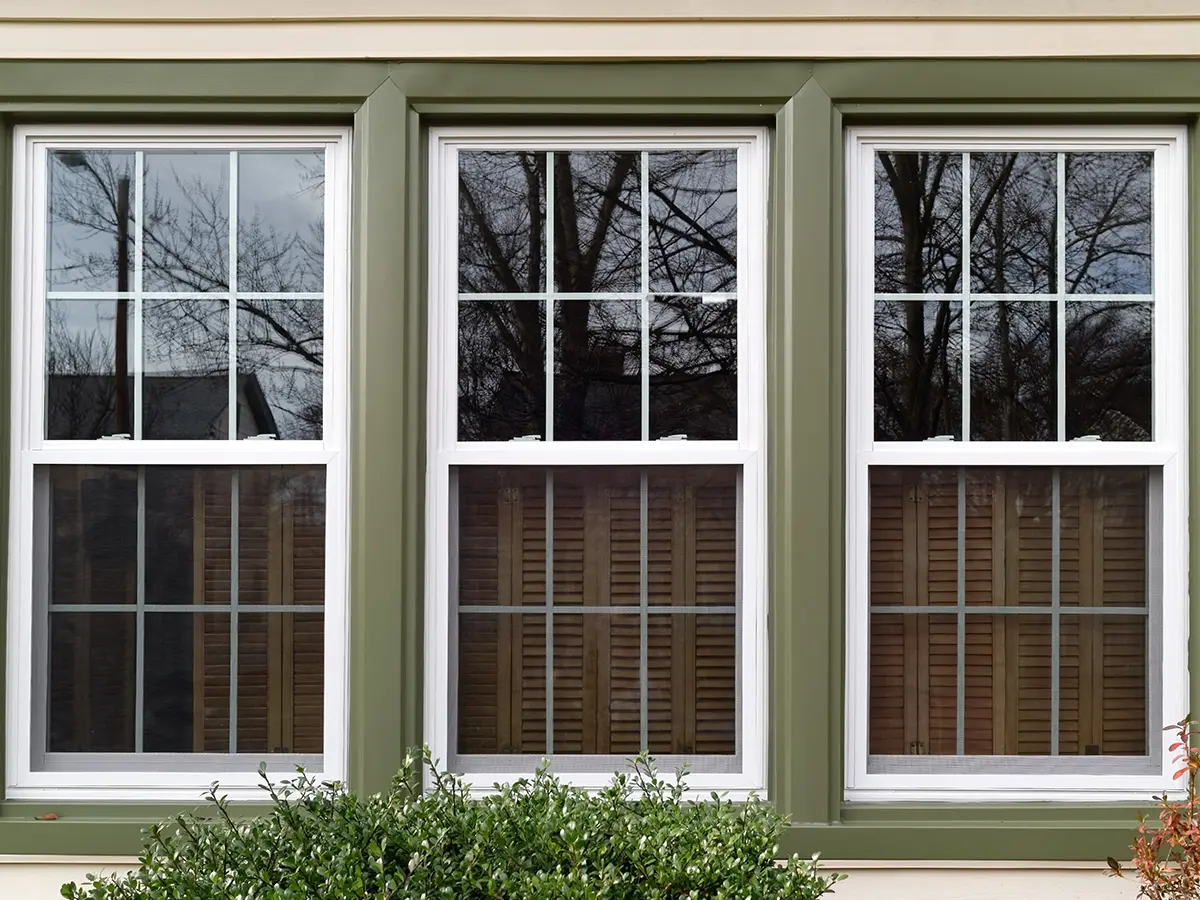
This comparison matters when your windows have wood trim on the inside. Casing around the opening, a stool at the bottom, a jamb you can put your hand on. That describes most wood windows and a lot of vinyl and metal windows too. Tennessee has a lot of homes with original wood windows, so if you’re in one of those, keep reading.
If your windows have a drywall return, where the sheetrock wraps right into the window with no wood trim, the terms below still apply but the details change. The frame usually comes out, the new window goes in against the rough opening, and the drywall gets patched and finished back to it. The short version: a drywall return home is almost always a full frame job whether you planned on it or not.
An insert window goes inside your existing window frame. The old sashes, glass, and hardware come out, but the frame stays in the wall and your interior trim stays exactly where it is. The new window is set into that opening, plumbed and leveled, foamed around the cavity, trimmed and sealed on the exterior, then caulked and finished on the interior.
You’ll hear this called a few different things: insert, pocket window, pocket replacement, retrofit, frame-in-frame. Same install.
What you give up: a little glass. Because the new window has to fit inside the old frame with room to plumb it and foam it, you lose somewhere around an inch of glass in width and height. On a standard bedroom or living room window you’ll see it if you go looking for it, and most people don’t. On a small window, a narrow bathroom or a short kitchen window over the sink, an inch is a bigger share of what you had. We point those out ahead of time so nobody is surprised.
What you keep: your interior trim, your paint, your blinds, your shades, and a lot less disruption. Most insert jobs are done in a day.

Not when the frame is good. It’s a bad idea when it isn’t, and that’s the whole question.
An insert depends on the old frame being solid, square enough, and dry. If someone sets a new window into a sill that’s soft or a jamb that’s been taking on water, the new window is going to look
fine on day one and the rot underneath keeps going. That’s how you end up buying windows twice.
So before we recommend an insert, we check. We push on the sill, look at the bottom corners of the jamb where water sits, check the exterior for staining, separation, or filler somebody used to hide a problem, and look at the sash tracks for signs of moisture. If the frame is in great condition, the insert window is the right call. If it’s not, we’ll show you where it failed and why it needs to come out. You should see the problem with your own eyes before you’re asked to pay for a bigger job.
If a company recommends an insert without anyone putting a hand on the frame, ask them why. And if a company only does one type of install, ask them how they know it’s the right one for your house.
A full frame replacement takes everything out. Interior trim, exterior trim, glass, and the entire window frame, down to the bare studs. Then the new window goes in and gets trimmed out fresh on the inside and the outside.
You’ll also hear this called a new construction style install, a tear-out, or a complete replacement.
What you get: the maximum glass the opening can hold, a brand new jamb and casing, and the chance to change how the window looks from inside the house.
What it involves: more labor, more material, and more decisions. New trim and jamb material, and whether it’s paint grade or stain grade, changes the scope. Blinds and shades that fit the old trim often won’t fit the new, so window treatments may need to be replaced or reordered. Interior paint touch-up is part of the job. It’s a bigger job, and it costs more per window because of it.
Every house is different, but as a rule of thumb, plan on a full frame install running somewhere in the range of a third to half again more per window than an insert with the same window in it. The window itself doesn’t change price much. The labor, the new jamb and trim material, and the finish work are what move the number.
Full frame windows do cost more, and that’s why some companies lean on it. Either it’s the only install they do, or they make more on bigger ticket items. Neither one of those is a real reason you need full frame.
We see this most in older homes with all-wood windows, the kind around Franklin, Brentwood, and the older neighborhoods in Gallatin and Hendersonville, where the homeowner is doing a bigger renovation and wants the windows to be part of it.
Everything else.
If your frames are solid, you like your trim, and you want better windows without turning it into a remodel, insert is the answer. Less disruption, less cost, no drywall touch-up, no repainting, no reordering blinds.
Trading an inch of glass for a simpler, cheaper install is a trade most homeowners make without a second thought, and for most houses it’s the right one.

Walk over to a window and check these. It takes about a minute.
Not sure which one you’re looking at? That’s what the inspection is for. We’ll check the frames, show you what we find, and tell you which install your house needs.
We do both. The right one depends on your house, not on what’s easiest to sell.
Nathen Kemper is the owner of Windows For Life and spent more than a decade installing windows and doors before starting the company. Windows For Life serves Gallatin, Hendersonville, Lebanon, Mt. Juliet, Franklin, Brentwood, and the Nashville area.